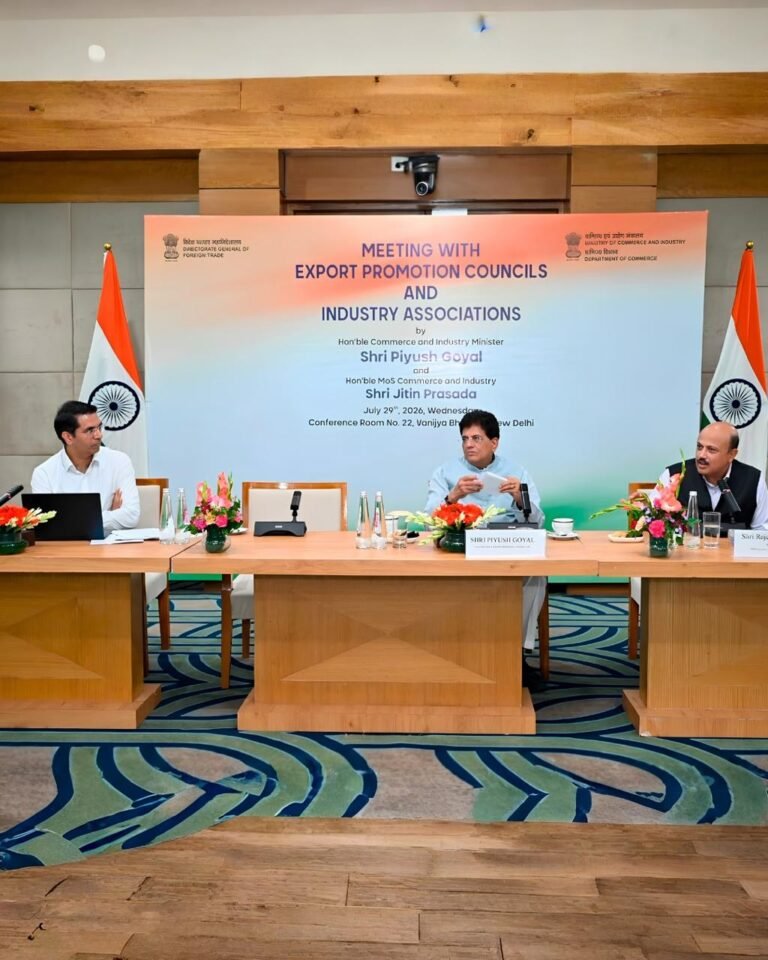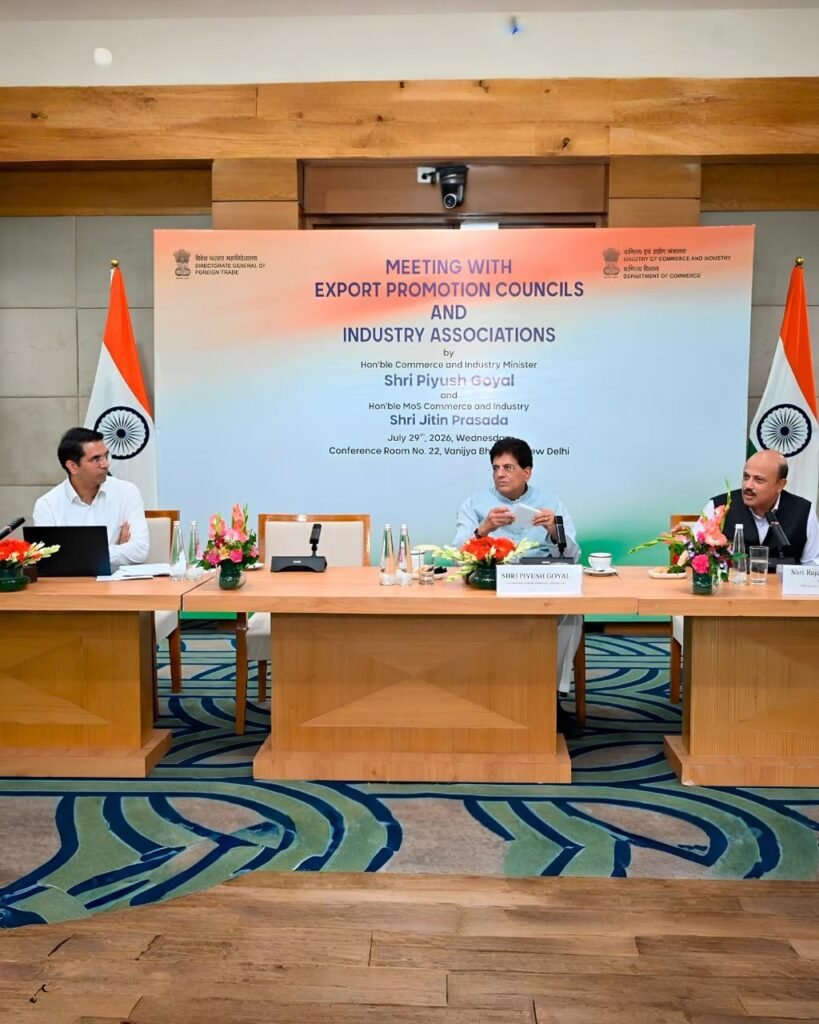

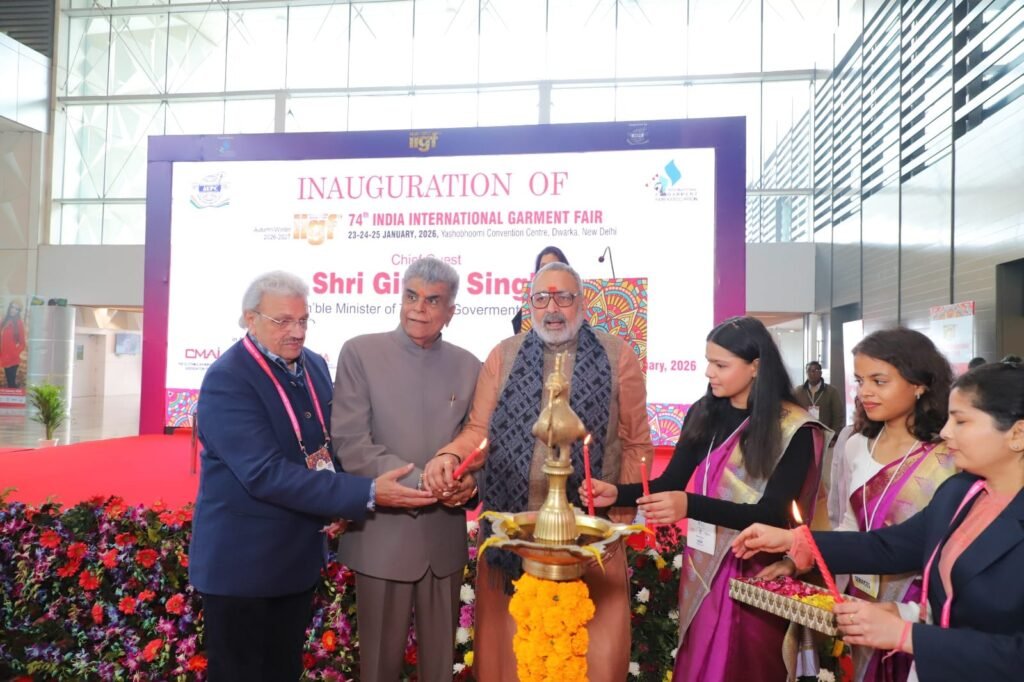
The 74th edition of the India International Garment Fair (IIGF), one of Asia’s largest and most influential apparel sourcing platforms, was inaugurated on 23 January 2026 at Yashobhoomi, Dwarka, New Delhi, by Shri Giriraj Singh, Hon’ble Union Minister for Textiles. The inauguration took place in the presence of a large gathering of apparel exporters, international buyers, and industry stakeholders, underscoring IIGF’s role as a critical bridge between Indian manufacturers and global markets.
The inauguration ceremony included the traditional lamp lighting, unveiling of the fair guide, and the Minister’s address, followed by a walkthrough of the exhibition halls where Shri Singh interacted with exhibitors and buyers. Organised by the Apparel Export Promotion Council (AEPC), the fair continues to serve as a vital platform for MSMEs and large exporters alike to showcase India’s apparel capabilities to the world.
India Moving Towards Indigenous Design and Forecasting Standards
Addressing the gathering as Chief Guest, Shri Giriraj Singh highlighted India’s strategic shift away from dependence on foreign benchmarking systems. He emphasised that indigenous initiatives such as VisionNxt and IndiaSize are being developed to establish India-specific design forecasting, sizing, and identity standards, in line with the vision of Aatmanirbhar Bharat. The Minister urged the industry to actively adopt and promote these Indian standards to strengthen domestic capabilities and global differentiation.
Reflecting on his continued association with the fair, Shri Singh remarked that IIGF has evolved into a trusted and globally recognised sourcing destination. He noted that the fair now stands as a major international platform for garment buyers, reinforcing India’s growing stature in the global apparel value chain.
Government Support and Export Diversification Drive
The Union Textiles Minister also outlined the various policy measures undertaken by the Government of India to support the textile and apparel sector. These include the removal of regulatory barriers, rationalisation of Quality Control Orders (QCOs), enhancements in RoDTEP and RoSCTL benefits, temporary reductions in import duties, and corrections to the inverted duty structure. He stated that the government has extended support of nearly ₹50,000 crore to the industry through RoDTEP and RoSCTL schemes.
Highlighting export diversification efforts, Shri Singh noted that India’s outreach to over 40 new countries has begun yielding encouraging results. Apparel exports have grown significantly in markets such as Argentina, Egypt, Poland, Japan, Sweden, and France. He further informed that the long-awaited India–EU trade agreement is expected to be signed shortly, which would further enhance India’s export competitiveness.
Emphasising India’s structural strengths, the Minister pointed to the country’s young workforce, strong raw material base, and foreign exchange surplus, stressing the importance of leveraging these advantages to achieve long-term export targets.
Strong Global Participation and Industry Resilience
Speaking at the inaugural function, Dr A. Sakthivel, Chairman of AEPC, expressed confidence in the continued global interest in Indian apparel. He noted that the 74th edition of IIGF features 233 exhibitors spread across 5,073 square metres, with more than 1,120 registered buyers. The participation of manufacturers from across the country, he said, reflects the depth and diversity of India’s apparel manufacturing ecosystem.
Despite persistent geopolitical and economic uncertainties, Dr Sakthivel highlighted the resilience of the Indian apparel industry. He shared that cumulative ready-made garment exports during April–December 2025–26 stood at USD 11,584.3 million, marking a growth of 2.4 per cent over the corresponding period of the previous year. This performance, he noted, underscores the industry’s ability to adapt, innovate, and sustain momentum even in challenging times.
Industry Requests and Confidence in the Road Ahead
Dr Sakthivel also outlined key policy requests submitted by the industry to further strengthen export competitiveness. These include the introduction of a Focus Market Scheme for apparel exports to the United States with freely transferable duty credit scrips equivalent to 20 percent of FOB value, removal of the annual ₹50 lakh cap under the interest equalisation scheme, and enhancement of the interest subvention rate to 5 percent. Such measures, he said, would provide critical relief to exporters, particularly MSMEs, during a period of global uncertainty.
He expressed particular satisfaction at the strong presence of international buyers from major global brands and retail chains, including companies from the UAE, South Korea, South Africa, Saudi Arabia, Russia, Japan, Italy, Israel, Hong Kong, France, Mauritius, and Spain. Their participation, Dr Sakthivel noted, reflects growing global trust in India’s design capabilities, quality standards, compliance systems, and delivery reliability.
Looking ahead, the AEPC Chairman expressed optimism about India’s long-term prospects. With the expected conclusion of the India–EU Free Trade Agreement and the gradual erosion of preferential market access for competing countries, India is well-positioned to gain market share. He reaffirmed the industry’s confidence in achieving the ambitious target of USD 40 billion in apparel exports by 2030 through sustained collaboration between industry and government.
On behalf of AEPC and the apparel sector, Dr Sakthivel placed on record his appreciation for the Government of India’s continued support through initiatives such as PM MITRA Parks, the Production Linked Incentive (PLI) Scheme, the National Technical Textiles Mission (NTTM), and SAMARTH, along with several recent policy interventions aimed at strengthening the textile and apparel ecosystem.
The event concluded with a vote of thanks delivered by Shri Rakesh Vaid, Vice Chairman of IGFA, who acknowledged the collective efforts of the government, AEPC, exhibitors, and buyers in making the 74th edition of IIGF a success.