
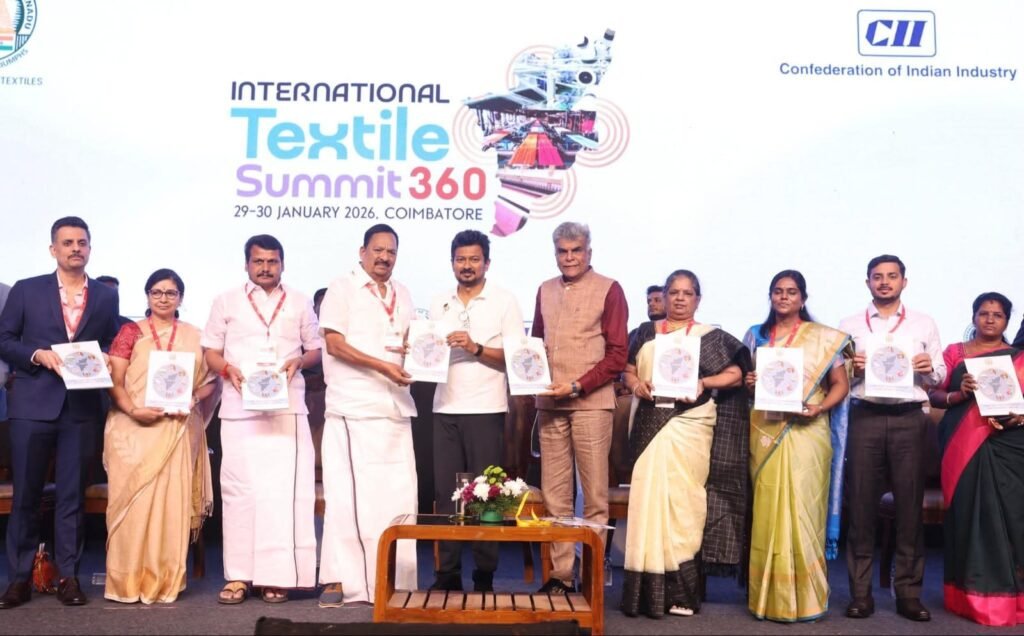
Tamil Nadu is no longer just supplying fabric to the world. It is actively shaping the future of global fashion manufacturing. In a decisive policy signal that blends ambition with scale, Chief Minister M.K. Stalin has announced a 20 per cent capital subsidy for weaving and knitting units investing in modern machinery, setting the tone for a new phase of technology-led and inclusive textile growth.
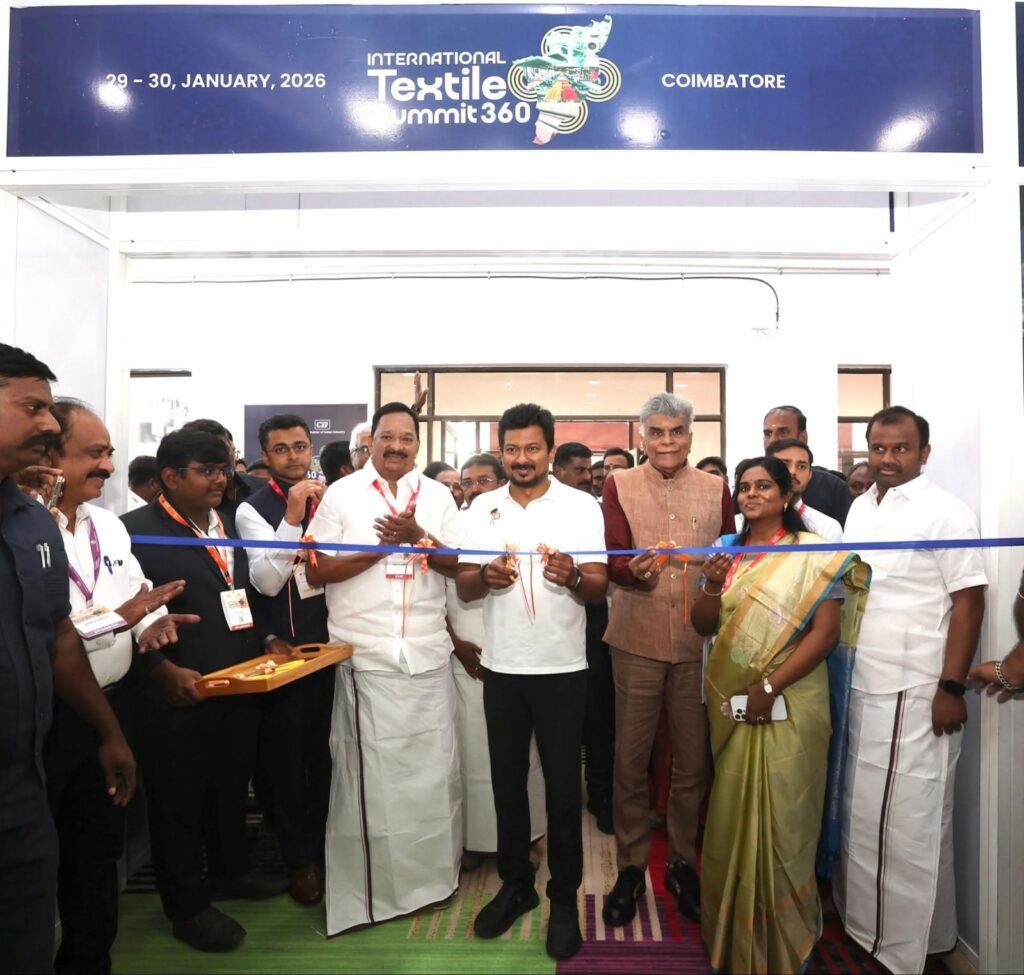
The announcement, made at the first International Textile Summit–360 in Coimbatore, comes at a time when global apparel supply chains are undergoing a fundamental reset. As Indian exporters navigate steep US tariff hikes and shifting sourcing strategies, Tamil Nadu has chosen to respond not with caution but with confidence.
Backed by an annual allocation of ₹30 crore, the capital subsidy reflects the State’s commitment to strengthening its textile backbone under the Dravidian Model of development, where industrial growth, social equity and long-term sustainability move forward together.
The Undisputed Engine of Indian Fashion
Even amid global uncertainty, Tamil Nadu continues to lead India’s apparel export story. For the fifth consecutive year, the state has emerged as the country’s largest exporter of readymade garments, accounting for 33 per cent of India’s total textile trade. This dominance is rooted in decades of engineering excellence, entrepreneurial depth and a highly skilled workforce.
At the heart of this success lies the industry’s people. Tamil Nadu’s textile and apparel sector provides direct employment to nearly 31 lakh workers, with women comprising over 60 per cent of the workforce. From spinning mills to garment factories, the state’s textile economy remains one of India’s most powerful drivers of women-led industrial employment.
Recognising the pressures from global trade disruptions, the State Government is also actively working to diversify export markets to reduce dependence on the US, especially in light of the recent 50 per cent tariff hike. At the same time, the Chief Minister has urged the Centre to abolish the 11 per cent import duty on cotton, a move widely seen as critical for restoring cost competitiveness across the apparel value chain.
Policy with Purpose, Investment with Vision
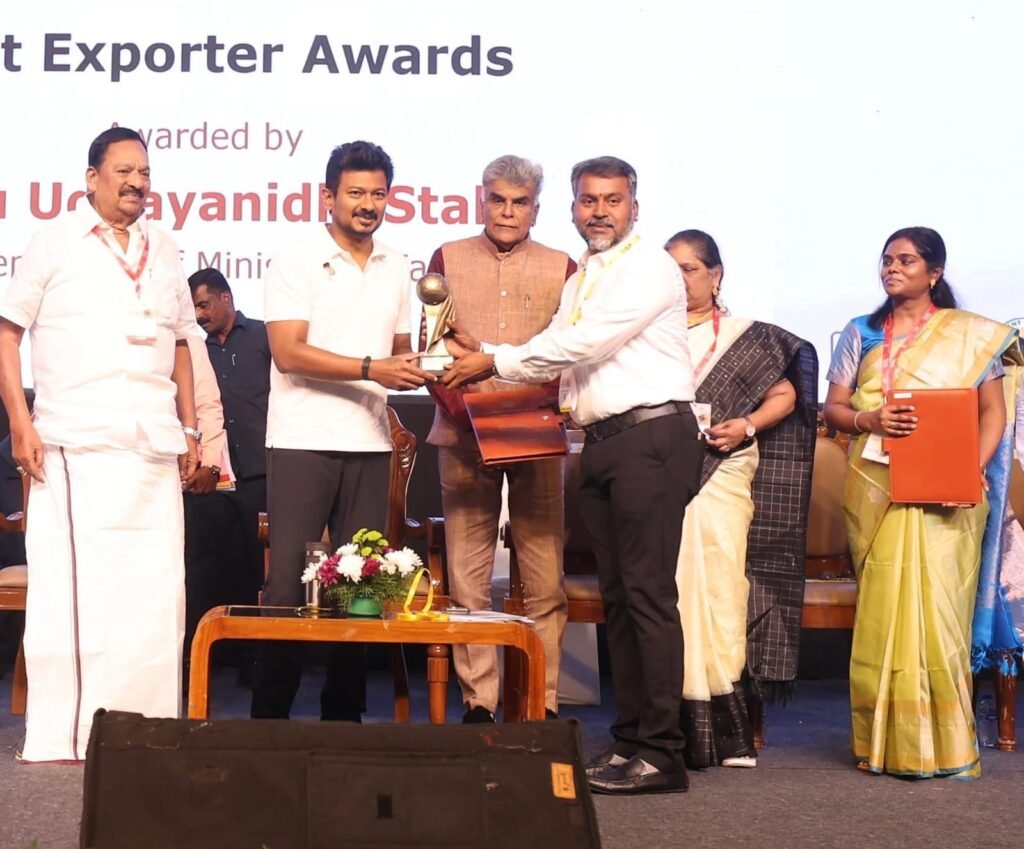
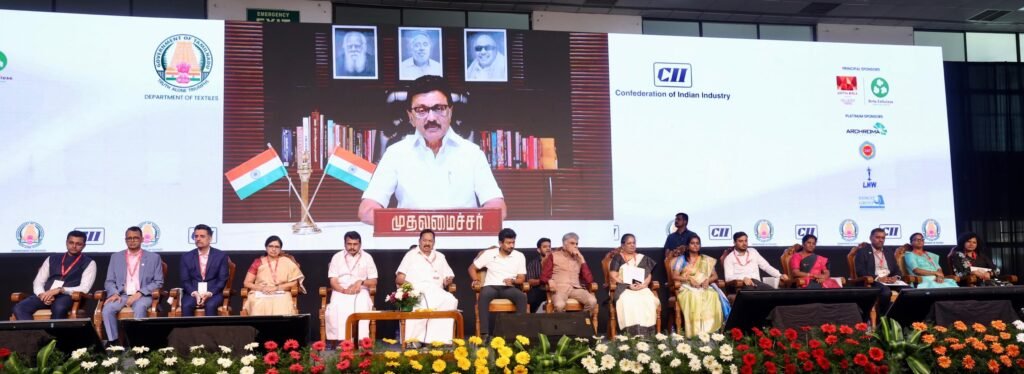
The International Textile Summit–360 sent a clear message to investors: Tamil Nadu is open, prepared and future-focused. The summit is expected to result in 55 Memoranda of Understanding (MoUs) worth ₹915 crore, covering spinning, weaving, processing, garmenting and value-added textile segments.
Anchoring this momentum is the Integrated Textile Policy 2026, which places competitiveness, sustainability, ease of doing business and global integration at its core, priorities increasingly demanded by international fashion brands and buyers.
Among the most transformative announcements is the PM Mega Integrated Textile Region and Apparel (PM MITRA) Park in Virudhunagar district. Spread across 1,053 acres and supported by ₹1,894 crore in common infrastructure investment, the park is projected to attract ₹10,000 crore in private investment, reshaping southern Tamil Nadu into a future-ready textile and apparel hub.
Coimbatore: Where Fibre Becomes Fashion
Addressing the summit at the CODISSIA complex, Deputy Chief Minister Udhayanidhi Stalin described Coimbatore, often called the “Manchester of South India”, as the heartbeat of Tamil Nadu’s textile innovation.
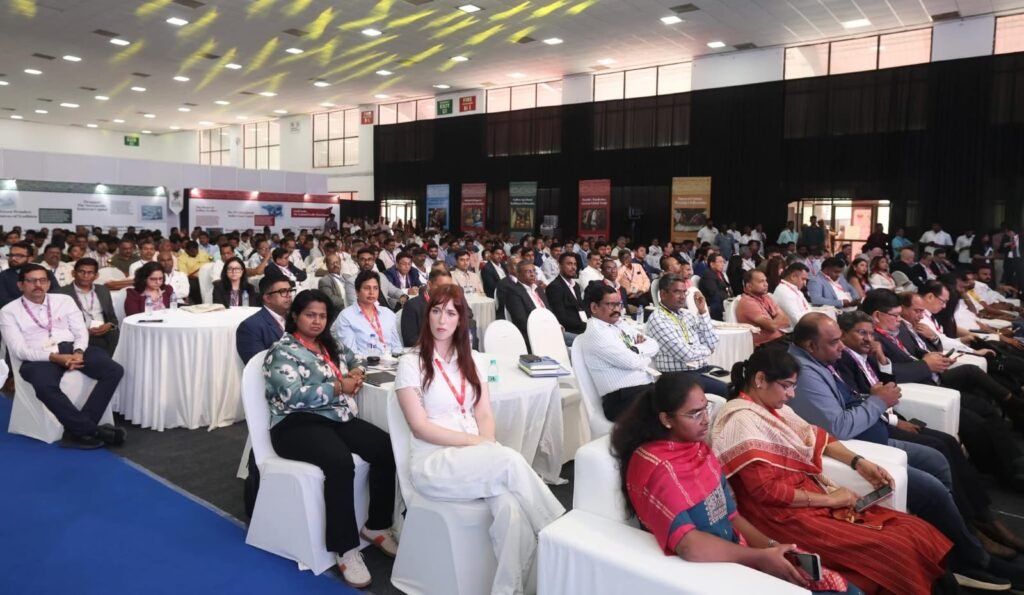
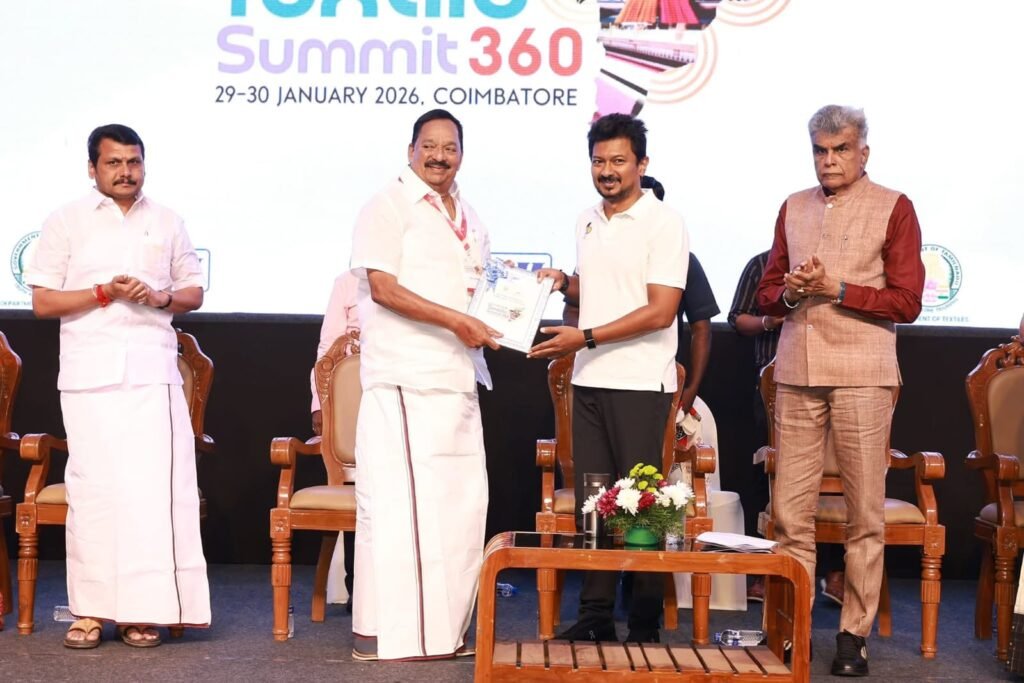
The state’s competitive edge lies in its complete fibre-to-fashion ecosystem, an advantage few global regions can replicate. Established clusters in Coimbatore, Tiruppur, Erode, Karur, Salem, and Chennai, along with emerging centres such as Madurai, Dindigul, and Virudhunagar, form a tightly integrated manufacturing network that delivers scale, speed, and consistency.
Tamil Nadu accounts for 46 per cent of India’s yarn production capacity and nearly 70 per cent of cotton fabric knitting capacity. It also supports about 28 per cent of the country’s total textile workforce, with 42 per cent of all women factory workers in India employed within the state, underscoring its leadership in inclusive industrial growth.
The Fashion Factory of the Future
As global fashion pivots toward smarter, cleaner and more transparent production systems, Tamil Nadu is embracing the transition with intent. From AI-driven production planning and smart automation to robotics and advanced machinery, the industry is steadily evolving beyond traditional manufacturing into advanced fashion engineering.
Further strengthening this shift, the State Government has announced amendments to the 6 per cent interest subvention scheme, extending support to pre- and post-spinning machinery and allowing mills to access the scheme up to three times. The move has been widely welcomed across the textile value chain, particularly by MSMEs looking to modernise.
A $1 Trillion Vision, Woven in Textile
As Tamil Nadu advances toward its ambition of becoming a $1 trillion economy, textiles remain one of its most powerful pillars. With stable policies, skilled talent, robust infrastructure and a clear global outlook, the state is no longer positioning itself merely as India’s Textile Valley.
It is emerging as a global destination for fashion manufacturing, sustainable production and textile innovation—where tradition meets technology, and fibre is transformed into the future of fashion.