

The Tiruppur Exporters’ Association (TEA) has welcomed the Tamil Nadu Interim Budget 2026–27, describing it as a forward-looking and growth-oriented financial blueprint that strengthens the State’s industrial base, textile expansion, infrastructure ecosystem, and innovation-led entrepreneurship.
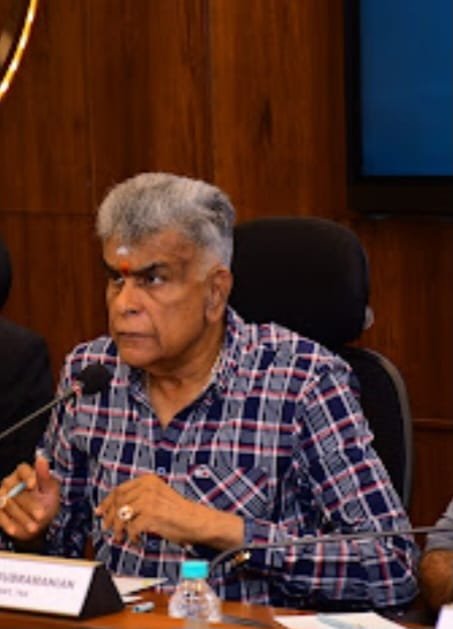
Mr K. M. Subramanian, President of TEA, stated that the Interim Budget presented in the Tamil Nadu Legislative Assembly by Hon’ble Finance Minister Thangam Thennarasu lays a solid foundation for sustained industrial progress. He noted that the Budget aligns closely with the State’s ambitious vision of transforming Tamil Nadu into a USD 1 trillion economy by 2030.
Mr Subramanian also expressed gratitude to Hon’ble Chief Minister M. K. Stalin for his committed leadership and consistent efforts in positioning Tamil Nadu as one of India’s most progressive and industrially advanced states.
Strengthening Tamil Nadu’s Textile Leadership
Tamil Nadu has long been recognised as one of India’s premier textile manufacturing hubs, with Tiruppur earning global distinction as the “Knitwear Capital of India.” The Interim Budget 2026–27 reinforces this leadership through targeted investments and infrastructure development designed to enhance competitiveness and sustainability.
For exporters in Tiruppur and across the State, the Budget signals stability, continuity, and a strong pro-industry outlook at a time when global supply chains are transforming.
Advanced Quality Testing Laboratory for Sports Textiles
One of the most significant announcements for the textile sector is the establishment of an Advanced Quality Testing Laboratory at the South India Textile Research Association (SITRA), Coimbatore, at an estimated cost of ₹6 crore.
Tamil Nadu already holds a leadership position in textile production, particularly in knitwear, hosiery, and performance fabrics. With growing global demand for sportswear and technical textiles, quality certification and compliance testing have become critical determinants of export success.
The new testing laboratory will enable advanced testing, validation, and certification of sports textiles. This initiative is expected to:
- Enhance product quality standards.
- Strengthen compliance with international norms.
- Improve buyer confidence.
- Boost export competitiveness in high-performance textile segments.
For Tiruppur exporters, who increasingly cater to global sportswear brands, the facility offers a significant advantage. Access to advanced testing infrastructure within the State reduces turnaround time, lowers compliance costs, and strengthens Tamil Nadu’s reputation as a reliable sourcing destination.
Boost to the Handloom Sector
The Interim Budget also provides renewed impetus to the handloom and traditional textile segments, ensuring inclusive growth across the value chain.
Ten new Handloom Parks will be established at an estimated cost of ₹20 crore. These parks are expected to provide modern infrastructure, common facilities, and improved market access for handloom clusters.
In a notable initiative, the Dr Kalaignar Karunanidhi Centenary Memorial Handloom Silk Park will be set up in the Arani region at an estimated cost of ₹24 crore. The project is expected to generate employment for around 5,000 handloom weavers.
This move reflects a balanced approach, supporting both large-scale export-driven manufacturing hubs and traditional artisan-based sectors. By modernising handloom infrastructure and providing cluster-based support, the government aims to preserve heritage while improving economic viability.
For the broader textile ecosystem, strengthening handloom production also enhances product diversity, enabling exporters to offer value-added and niche collections in global markets.
Infrastructure & Logistics: Enabling Industrial Efficiency
Beyond sector-specific allocations, the Interim Budget places strong emphasis on infrastructure and logistics, key enablers for export-oriented industries.
The proposed Metro Rail expansion is expected to improve urban connectivity, ease mobility, and support industrial workforce movement in major cities.
The announcement of new TIDEL Parks in Tiruchi, Madurai, and Hosur indicates the State’s commitment to decentralised industrial development. By promoting IT and technology infrastructure in tier-two cities, Tamil Nadu is creating employment opportunities beyond metropolitan clusters and encouraging balanced regional growth.
For the textile industry, improved infrastructure translates into:
- Better connectivity to ports and airports.
- Reduced logistics bottlenecks.
- Faster movement of goods.
- Lower operational costs.
Efficient logistics is critical for Tiruppur’s export ecosystem, which operates on tight production schedules and rapid order cycles. Infrastructure upgrades enhance reliability, an essential factor in maintaining long-term relationships with global buyers.
Driving MSME Growth and Export Competitiveness
Tiruppur’s industrial ecosystem is largely MSME-driven. Thousands of small and medium enterprises form the backbone of the region’s garment manufacturing and export operations.
Mr K. M. Subramanian emphasised that the various allocations and policy initiatives announced in the Interim Budget 2026–27 will:
- Enhance competitiveness across the textile value chain.
- Strengthen MSMEs through supportive policies.
- Generate large-scale employment opportunities.
- Further consolidate Tamil Nadu’s position as a leading textile hub in India.
By focusing on quality infrastructure, skill development, cluster expansion, and technological advancement, the State government is reinforcing the structural strengths that have made Tiruppur globally competitive.
Aligning with the $1 Trillion Vision
The Interim Budget is closely aligned with Tamil Nadu’s broader vision of achieving a $1 trillion economy by 2030. The textile and apparel sector plays a crucial role in this roadmap, contributing significantly to exports, foreign exchange earnings, and employment generation.
With sustained policy support, improved testing infrastructure, handloom modernisation, and logistics upgrades, Tamil Nadu is positioning itself to capture emerging opportunities in:
- Technical textiles.
- Sportswear and performance apparel.
- Sustainable manufacturing.
- High-value export segments.
For Tiruppur exporters, the message is clear: the State remains firmly committed to strengthening its industrial foundation and supporting export growth.
Industry Confidence and Future Outlook
The positive response from the Tiruppur Exporters’ Association reflects growing industry confidence in the State’s economic direction. In a global environment marked by supply chain diversification and rising compliance standards, Tamil Nadu’s proactive policy measures offer stability and strategic advantage.
With strong government-industry collaboration, investments in quality infrastructure, and a balanced focus on modern and traditional sectors, Tamil Nadu continues to demonstrate leadership in industrial and textile development.
As Mr K. M. Subramanian reiterated, the Interim Budget 2026–27 is not merely a financial statement; it is a roadmap for sustained competitiveness, employment generation, and export-led growth.
For Tiruppur and the wider textile community, it signals continued momentum toward global excellence.