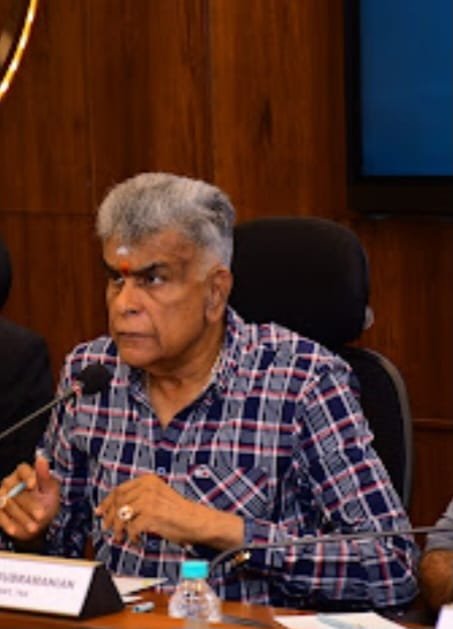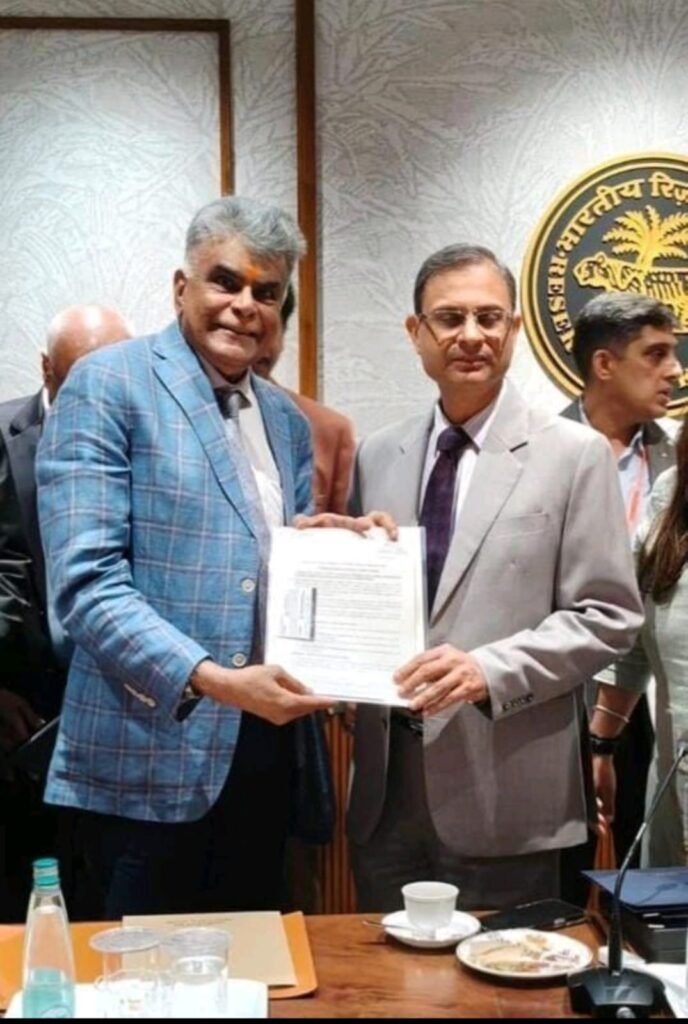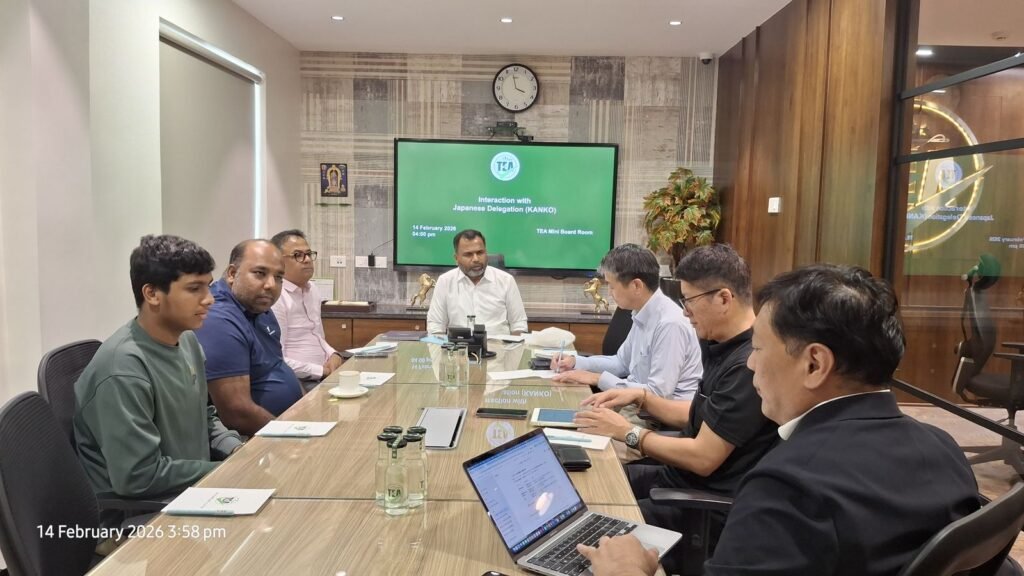


Dr A. Sakthivel, Chairman of the Apparel Export Promotion Council (AEPC), has welcomed the Interim Budget 2026–27 presented in the Tamil Nadu Legislative Assembly by Hon’ble Finance Minister Thangam Thennarasu, stating that the budget lays a strong and strategic foundation for MSME-led industrial growth, textile sector expansion, infrastructure development, and innovation-driven entrepreneurship in the State.
Dr Sakthivel also expressed his gratitude to Hon’ble Chief Minister M. K. Stalin for his continued commitment and leadership in ensuring that Tamil Nadu remains at the forefront among Indian states in manufacturing, exports, industrial growth, and employment generation.
According to him, the Interim Budget aligns seamlessly with Tamil Nadu’s ambitious vision of becoming a USD 1 trillion economy by 2031, while further consolidating its leadership in exports, manufacturing excellence, and inclusive economic development.
Strong Focus on MSME & Industrial Growth
One of the most significant highlights of the Interim Budget is its robust allocation and policy support for the MSME sector, the backbone of Tamil Nadu’s industrial ecosystem.
An allocation of ₹1,943 crore to the MSME Department underscores the government’s intent to strengthen small and medium enterprises, which play a critical role in job creation and export performance.
In a major boost to equity-based growth, the announcement of a ₹10,000 crore SME Growth Fund is expected to provide long-term capital support to scalable enterprises. This move is particularly important as many MSMEs struggle with debt-heavy financing structures. Equity infusion will allow enterprises to expand operations, modernise technology, and improve global competitiveness.
Additionally, the ₹2,000 crore boost to the Self-Reliant India Fund will further enhance financial resilience and capacity-building among emerging enterprises.
Dr Sakthivel noted that the introduction of the Tamil Nadu Prompt Payment System is a highly practical intervention. Delayed payments often strain MSME liquidity and disrupt working capital cycles. By institutionalising prompt payment mechanisms, the government has addressed a long-standing concern of the sector.
Further, the announcement of Rare Earth Corridors and logistics strengthening measures reflects Tamil Nadu’s ambition to move into advanced manufacturing and high-value industrial segments, integrating MSMEs into next-generation supply chains.
Major Impetus to Textiles & Khadi
For the textile and apparel sector, one of Tamil Nadu’s strongest pillars, the budget signals continuity and expansion.
A dedicated allocation of ₹1,943 crore for Textiles and Khadi demonstrates the State’s commitment to maintaining its leadership in spinning, weaving, knitwear, technical textiles, and garment manufacturing.
The proposed Tamil Nadu Technical Textiles Mission is a forward-looking initiative aimed at attracting investments into high-performance fabrics, medical textiles, industrial textiles, and other emerging segments. With global demand for technical textiles rising steadily, this mission positions Tamil Nadu to capture new market opportunities beyond traditional apparel.
Integration of handloom and handicraft support schemes further strengthens inclusivity, ensuring that rural artisans and traditional sectors are not left behind in the State’s growth trajectory.
Skill development receives renewed focus under Samarth 2.0, which aims to enhance workforce capabilities in modern textile technologies and production processes. A skilled workforce remains a key competitive advantage for Tamil Nadu, particularly in knitwear clusters such as Tiruppur and textile hubs like Coimbatore, Erode, and Karur.
The Tex-Eco Initiative marks a strong sustainability push, encouraging eco-friendly manufacturing practices. As global buyers increasingly demand low-carbon, water-efficient, and ethically compliant supply chains, such initiatives will enhance Tamil Nadu’s attractiveness as a sourcing destination.
Bi-annual export expos and R&D subsidies will further promote innovation, buyer engagement, and product diversification, critical components for export-led growth.
Start-up & Innovation Ecosystem Gains Momentum
Tamil Nadu’s innovation ecosystem continues to expand rapidly, with over 13,000 start-ups currently operating across sectors.
The Interim Budget reiterates continued support through seed funding, structured financial assistance, and ecosystem development initiatives. This sustained focus on innovation complements traditional industries like textiles by fostering technology adoption, digital transformation, and new business models.
For the textile and apparel industry, collaboration between start-ups and established manufacturers can drive advancements in sustainable materials, smart textiles, AI-driven supply chain management, and digital commerce platforms.
Dr Sakthivel highlighted that nurturing entrepreneurship is essential for building future-ready industries and strengthening Tamil Nadu’s position as a knowledge-driven manufacturing hub.
Infrastructure & Logistics: Strengthening the Export Backbone
Infrastructure development forms another cornerstone of the Interim Budget.
The proposed Metro Rail expansion will enhance urban mobility, benefiting the industrial labour movement and business connectivity. Improved public infrastructure contributes to productivity gains and urban economic efficiency.
The announcement of new TIDEL Parks in Tiruchi, Madurai, and Hosur, along with Mini IT Parks across districts, reflects a decentralised development model. By creating employment opportunities across regions, the government ensures balanced industrial growth.
Strengthening the export ecosystem in Coimbatore is particularly significant for textile and engineering exporters. Enhanced logistics and support infrastructure will streamline trade flows and reduce turnaround times.
For export-oriented sectors, efficient infrastructure directly translates into cost competitiveness and reliability in global markets.
Port-led Industrialisation & Marine Manufacturing
In a notable move toward port-led industrialisation, the Interim Budget proposes a new Shipbuilding Policy aimed at promoting marine manufacturing.
The collaboration between SIPCOT and V.O. Chidambaranar Port Authority to develop a shipbuilding cluster in Thoothukudi is a strategic initiative. Port-based clusters can stimulate ancillary industries, generate employment, and strengthen Tamil Nadu’s maritime trade infrastructure.
Improved port connectivity and industrial clustering will also benefit exporters in textiles and other sectors by reducing logistics bottlenecks and enhancing export efficiency.
A Balanced and Forward-Looking Approach
Summarising his views, Dr Sakthivel stated:
“The Interim Budget 2026–27 reflects a balanced and forward-looking approach with strong emphasis on MSMEs, textiles, sustainability, infrastructure, and innovation. Tamil Nadu continues to demonstrate visionary leadership in industrial growth and export promotion. These initiatives will significantly enhance competitiveness and generate large-scale employment.”
He emphasised that the combined focus on MSMEs, textiles, technical innovation, infrastructure expansion, and sustainability will strengthen Tamil Nadu’s industrial ecosystem at a time when global supply chains are transforming.
The budget not only supports immediate growth but also builds structural capacity for long-term resilience.
trengthening Tamil Nadu’s Export Leadership
Tamil Nadu has consistently ranked among India’s top exporting states, with textiles and apparel playing a central role. The policy announcements in the Interim Budget 2026–27 reinforce the State’s intent to consolidate this leadership.
By integrating financial support, skill development, sustainability initiatives, infrastructure enhancement, and port-led industrialisation, the government has crafted a comprehensive roadmap for inclusive and export-driven development.
For the textile and apparel industry, the message is clear: Tamil Nadu is committed to remaining a globally competitive, innovation-led, and sustainability-aligned manufacturing powerhouse.