
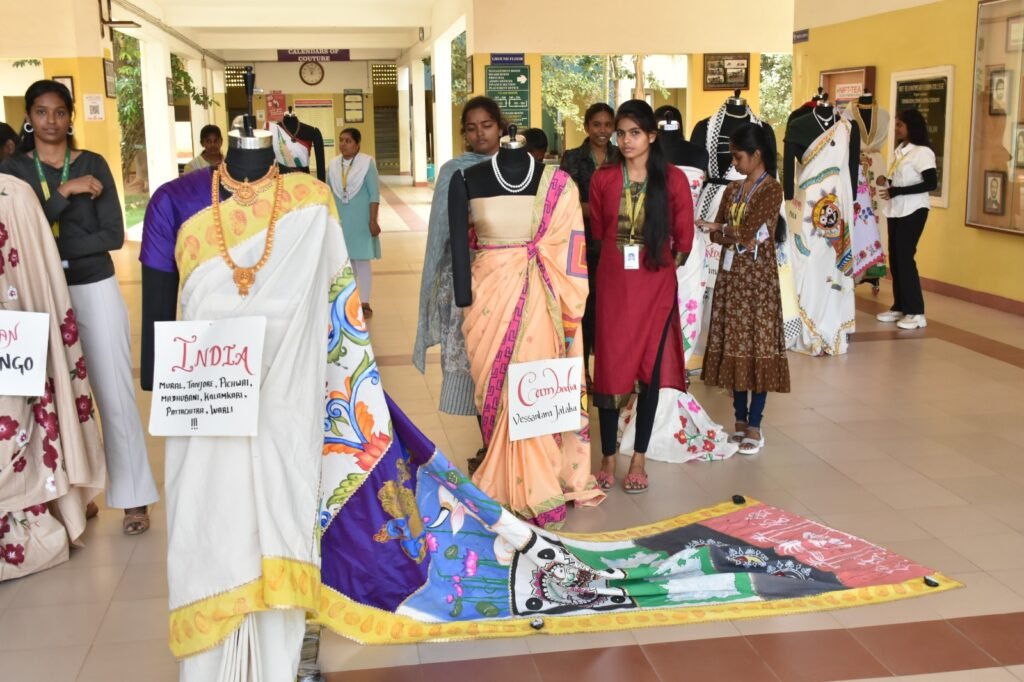
The Costume Designing Department of NIFT-TEA College of Knitwear Fashion has once again demonstrated the creative strength of young designers with a distinctive exhibition titled “Exploring World Traditional Design in Saree”, held at the college campus. Aptly themed “Art Beyond Boundaries”, the exhibition presents 14 hand-painted sarees inspired by traditional and contemporary art forms from 14 countries across the globe.
Conceptualised and executed within just one month, the collection reflects the imagination, discipline, and artistic maturity of 14 student designers, each interpreting a different global art heritage on the timeless canvas of the saree. The result is a compelling fusion of world art traditions with Indian textile sensibilities, reinforcing the saree’s relevance in contemporary design narratives.
Saree as a Global Canvas
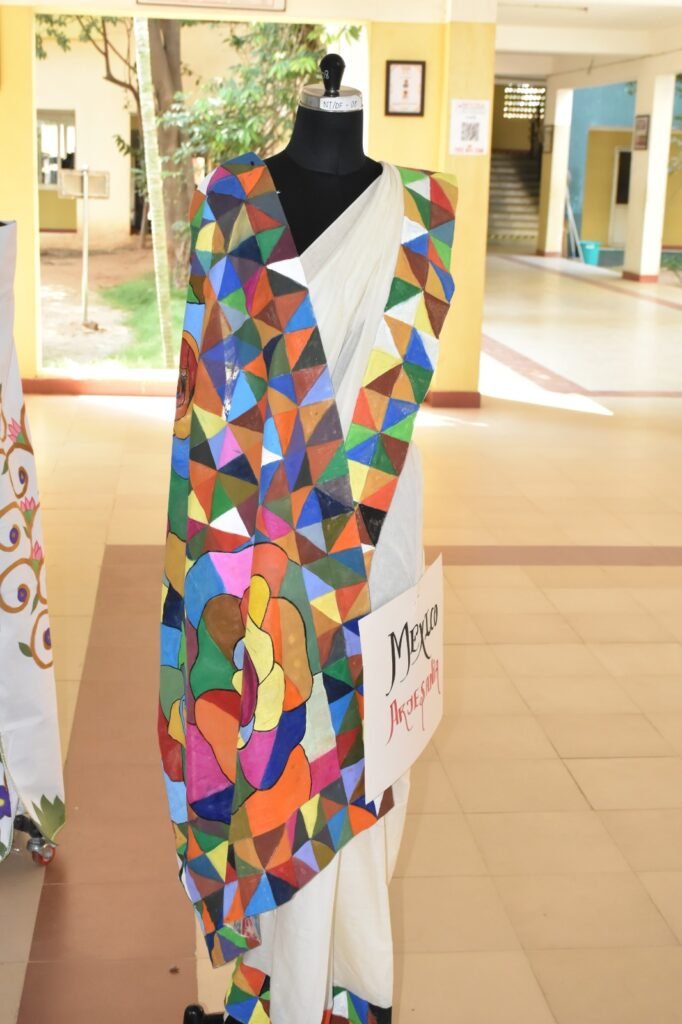
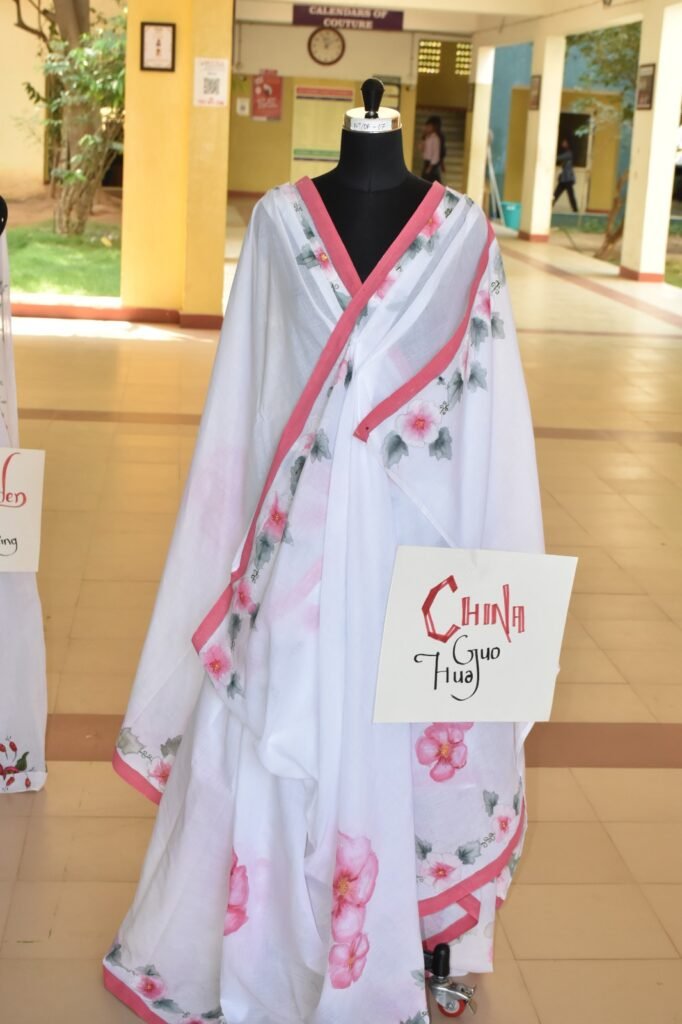
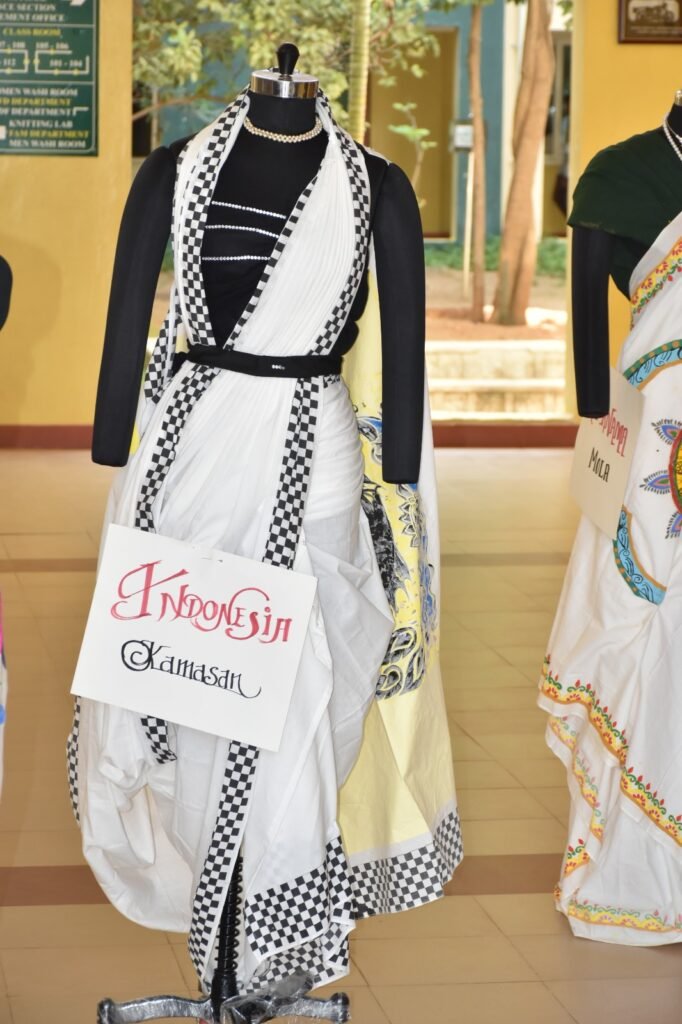
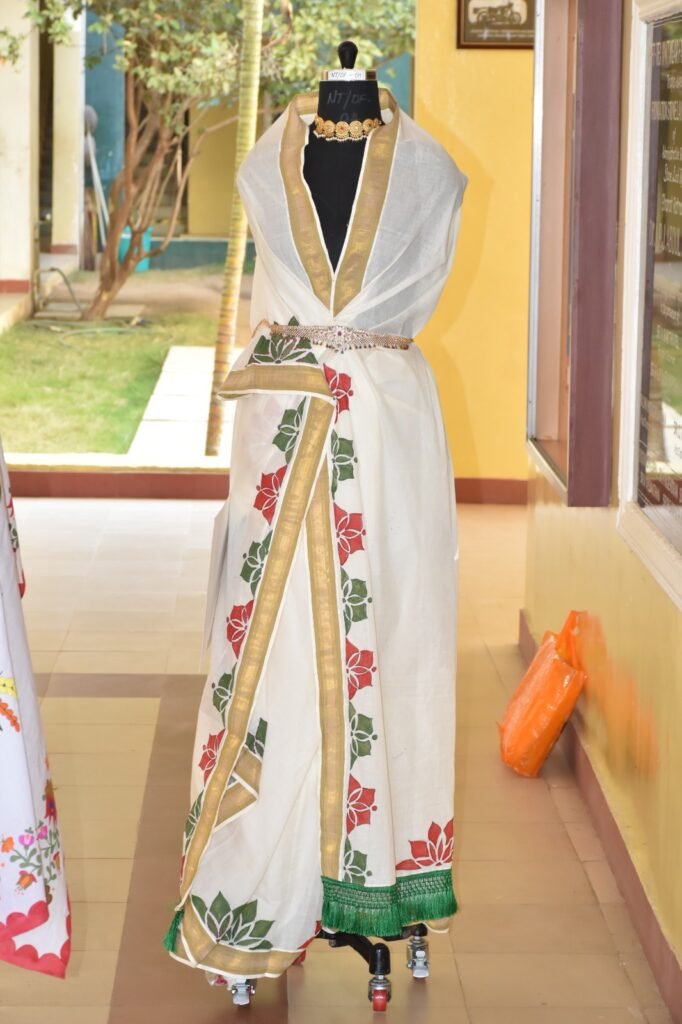
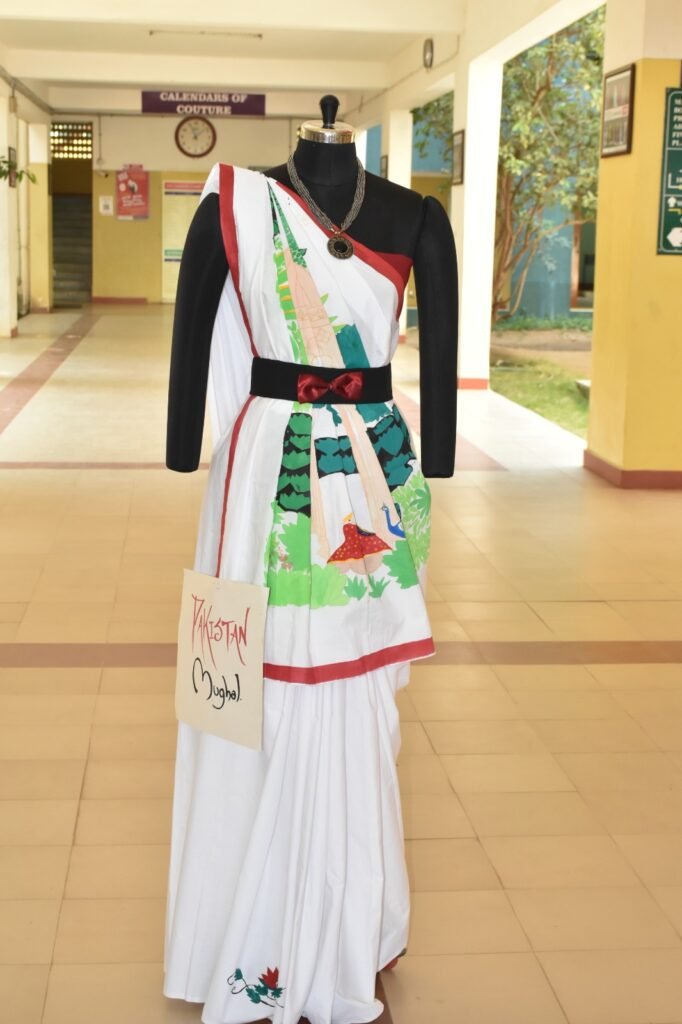
The exhibition reimagines the saree not merely as a traditional Indian garment but as a powerful artistic medium capable of transcending borders. Through intricate motifs, symbolic storytelling, vibrant colour palettes, and expressive brushwork, each piece tells a story rooted in a specific cultural context while remaining visually cohesive within the broader theme.
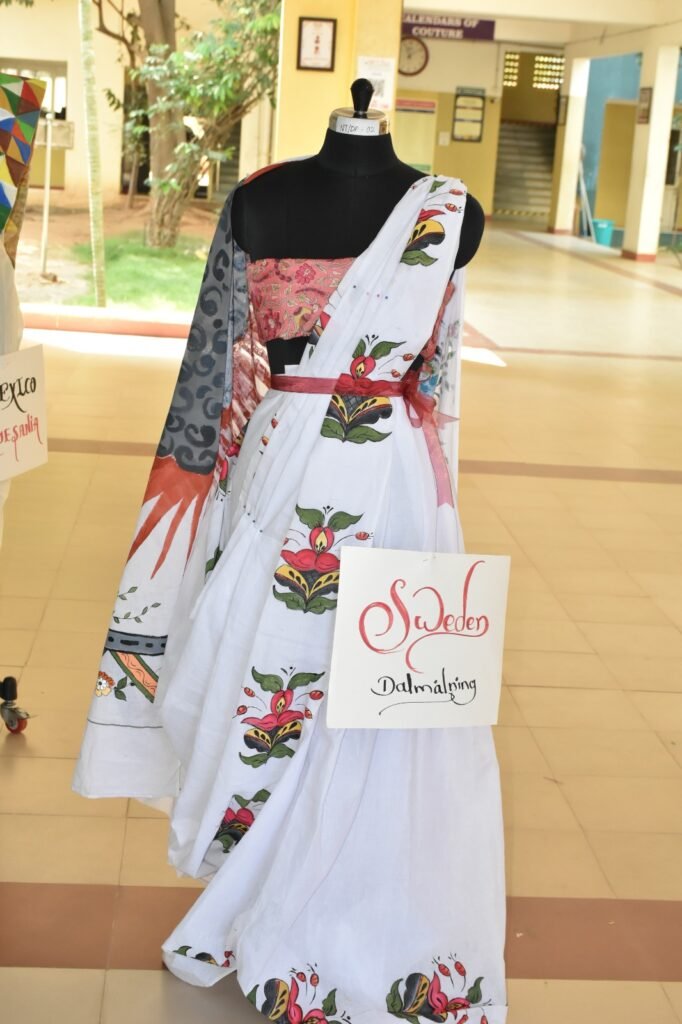
The hand-painted approach gives every saree individuality and depth, highlighting the tactile and emotional connection between artist and textile. In an age dominated by digital prints and mass production, the exhibition strongly advocates for artisanal craftsmanship, slow fashion, and sustainable design practices.
Fourteen Countries, Fourteen Artistic Narratives
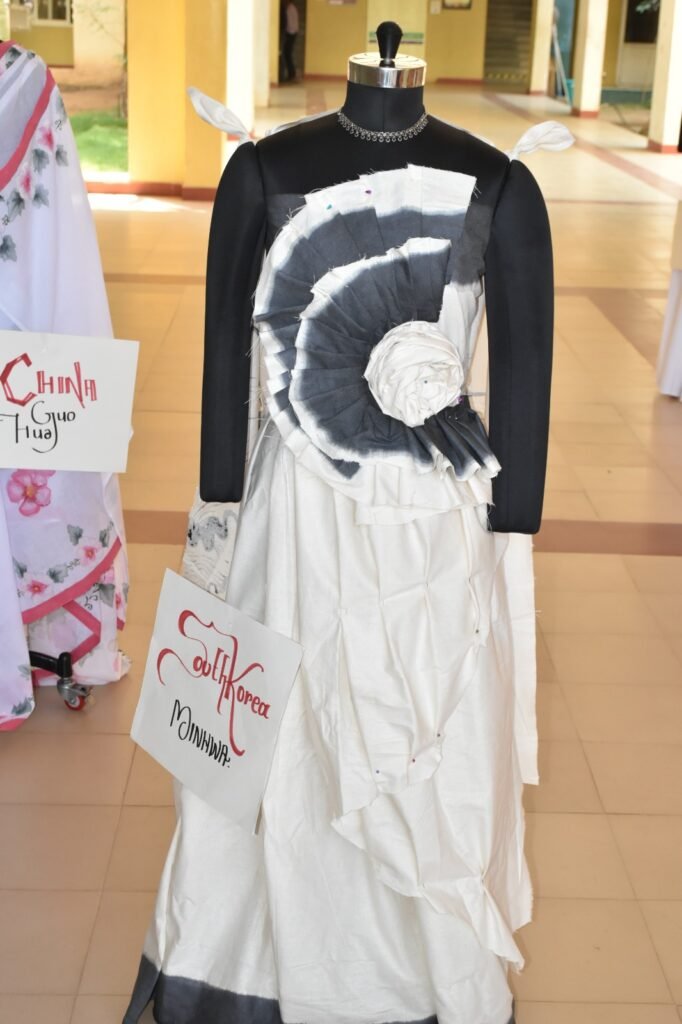
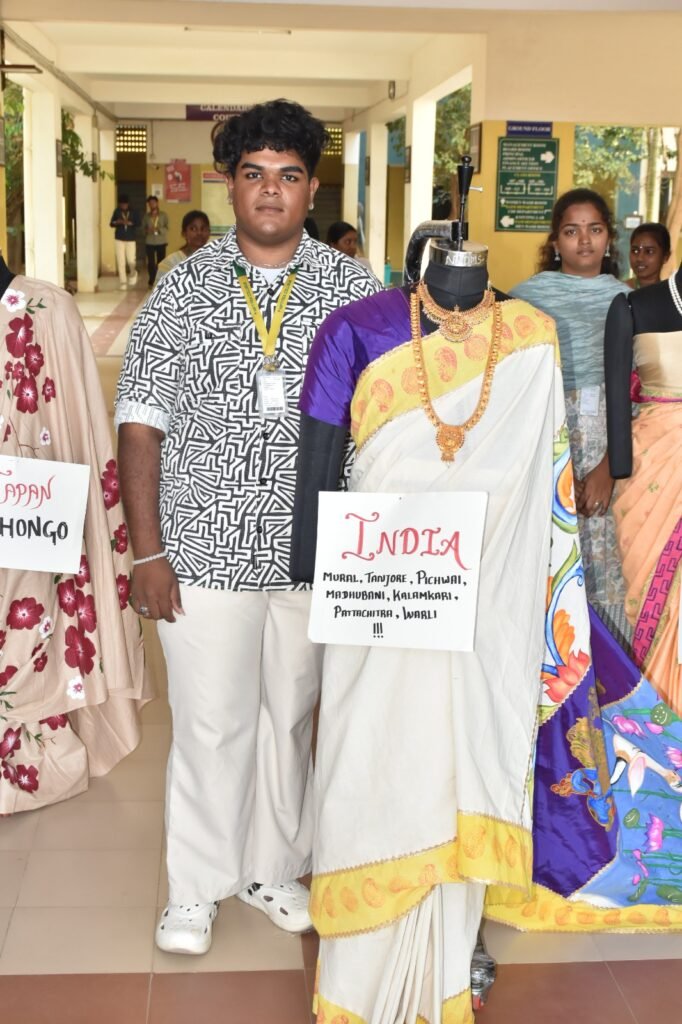
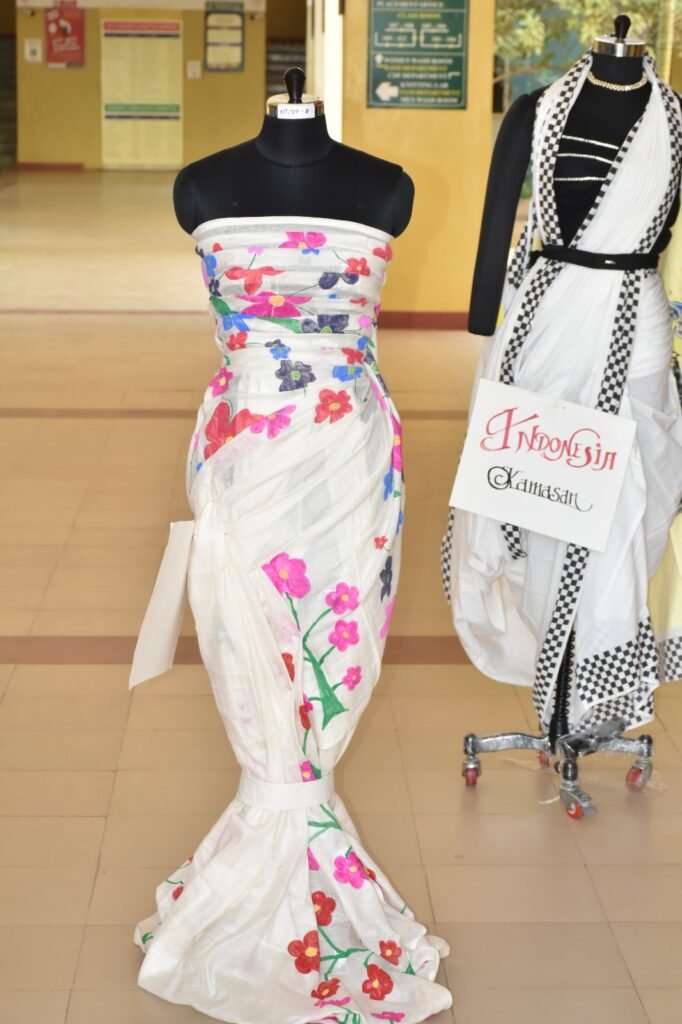
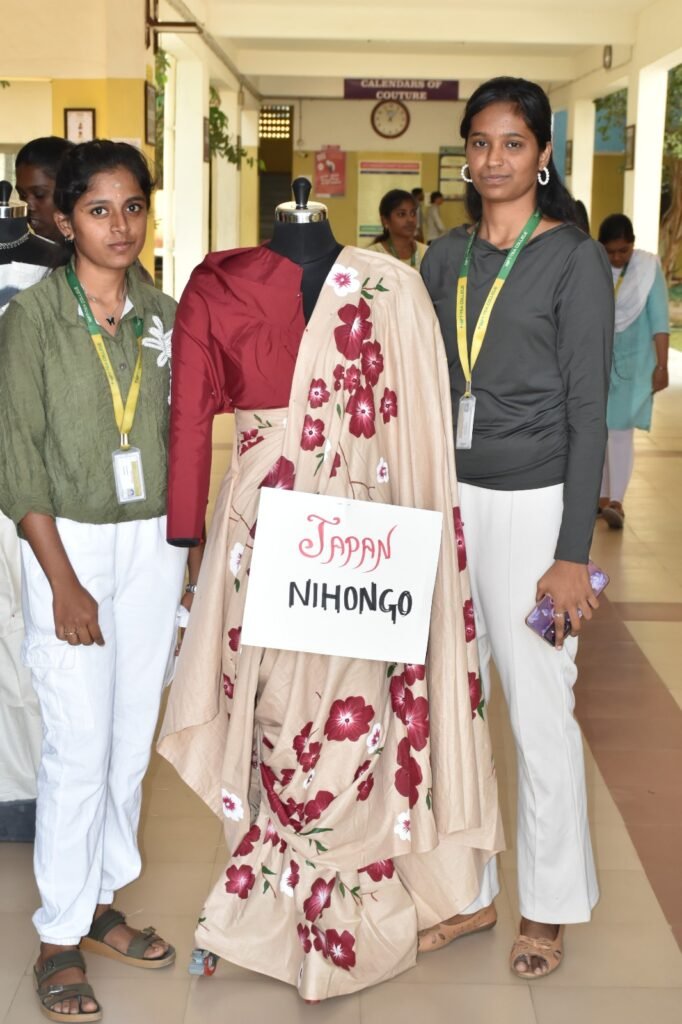
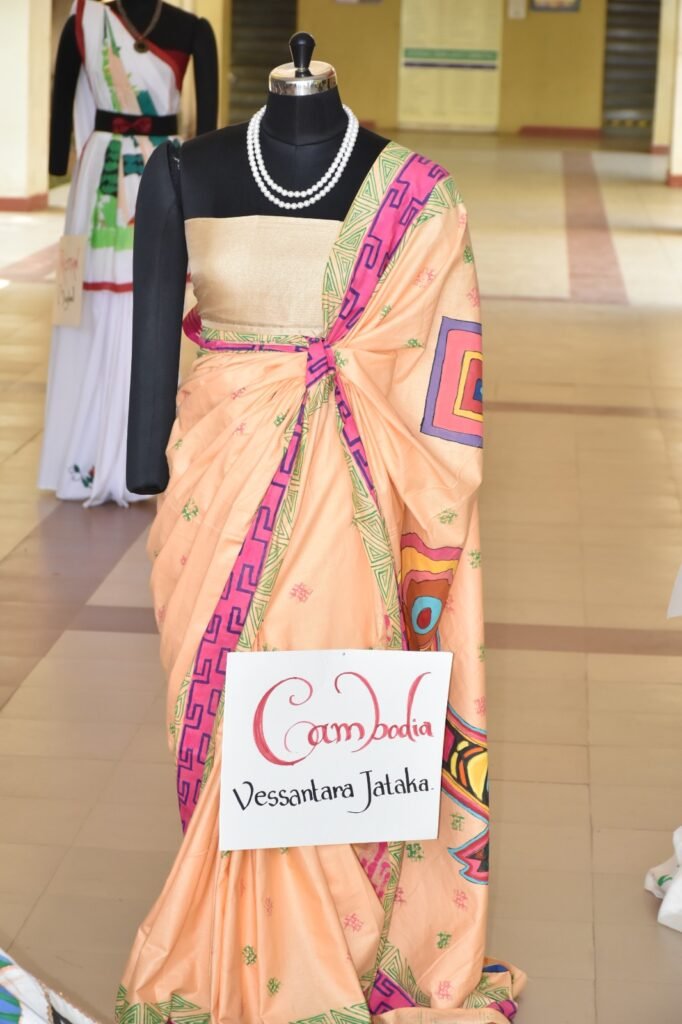
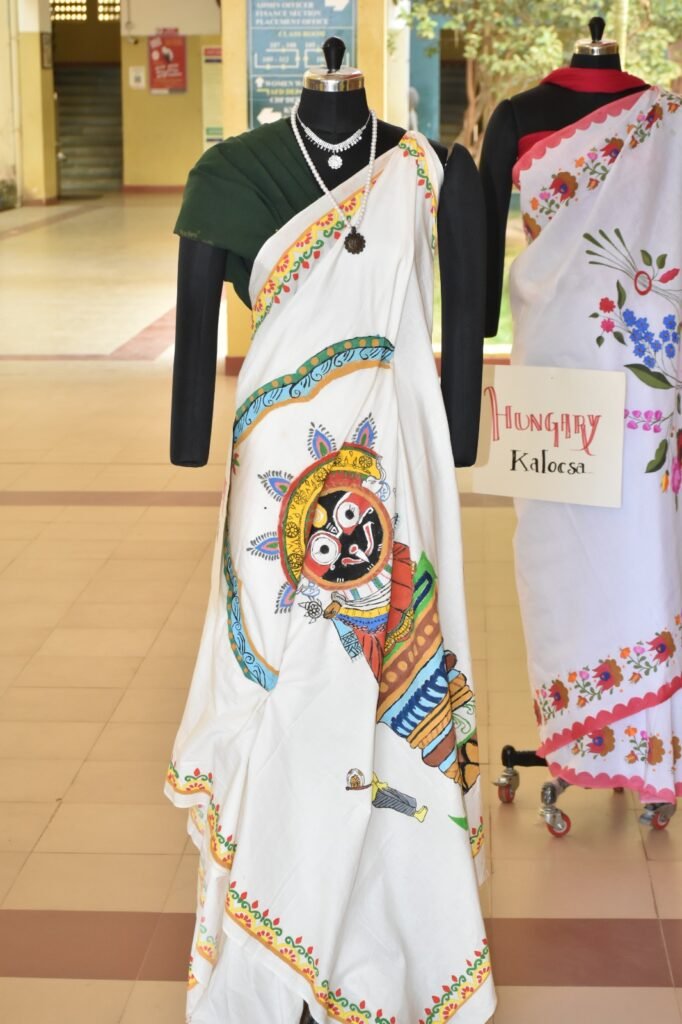
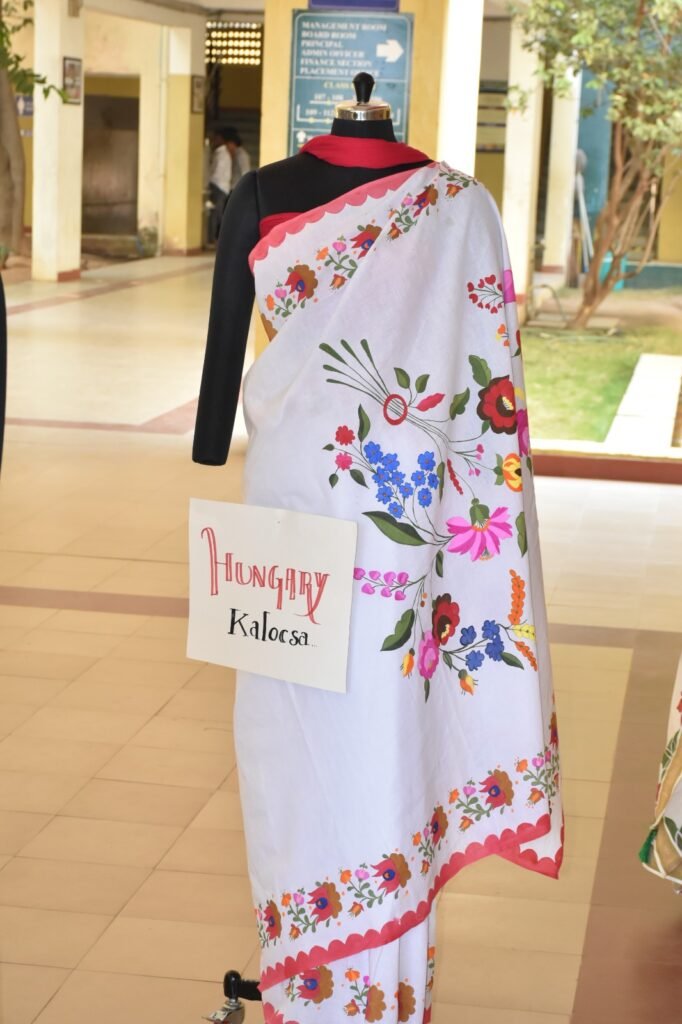
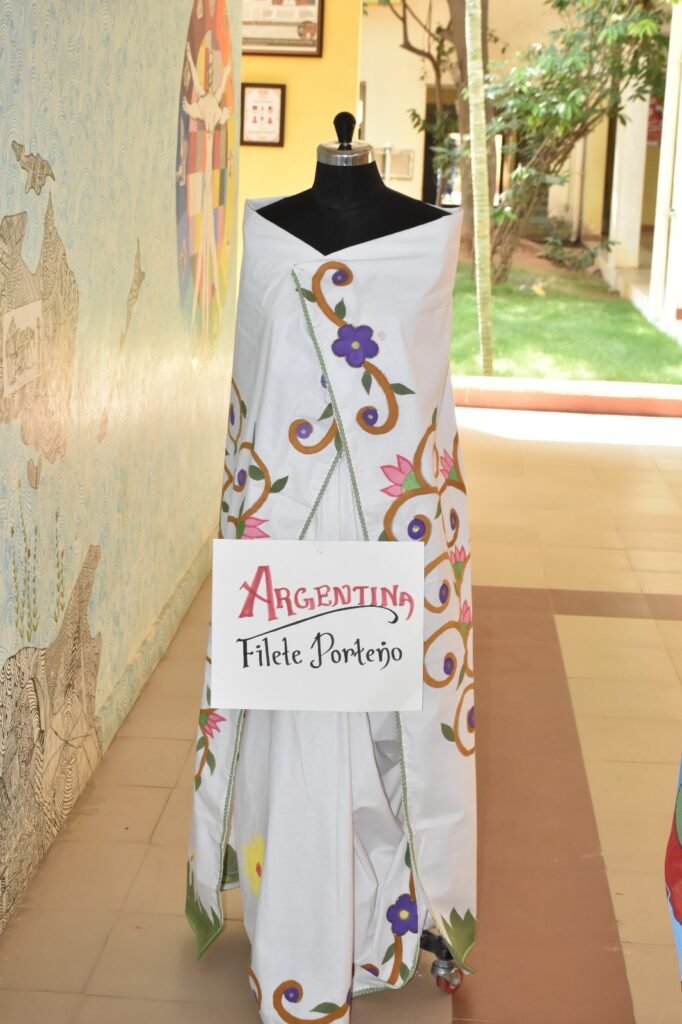
Each saree in the collection represents a different country and its distinct art tradition:
- Albania – Motra Tone, reflecting traditional Albanian folk aesthetics
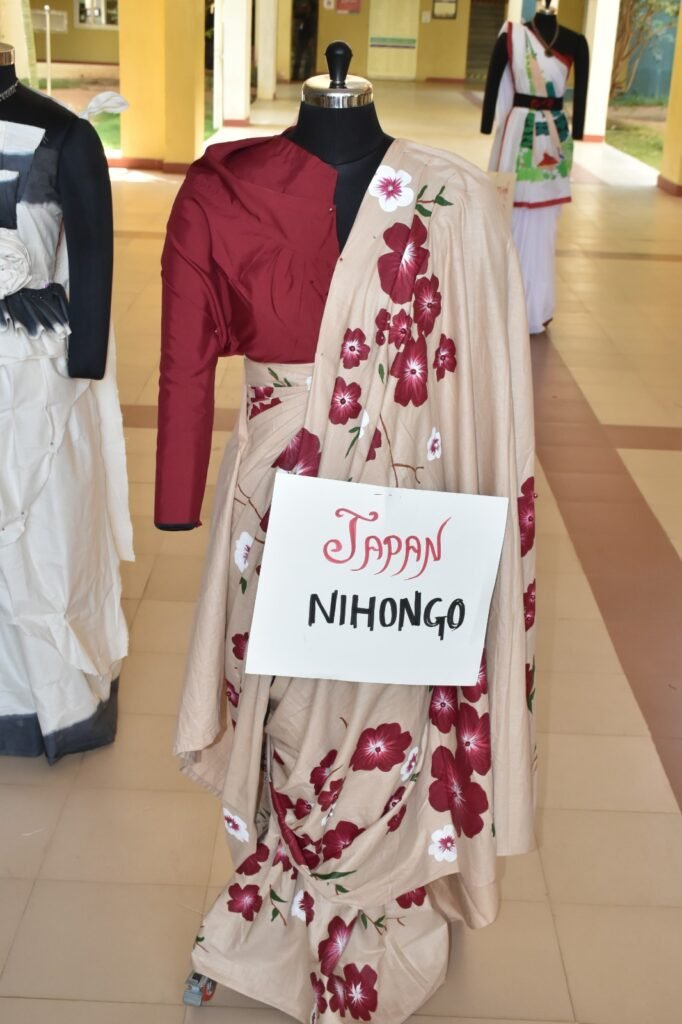
- Japan – Nihonga, capturing the delicate refinement of Japanese painting
- China – Guo Hua, inspired by classical Chinese brush art
- South Korea – Minhwa, known for its vibrant folk symbolism
- Pakistan – Mughal Art, rich in historical grandeur and intricate detailing
- Turkey – Ebru, the mesmerising art of paper marbling
- Panama – Mola, showcasing bold geometric textile appliqué traditions
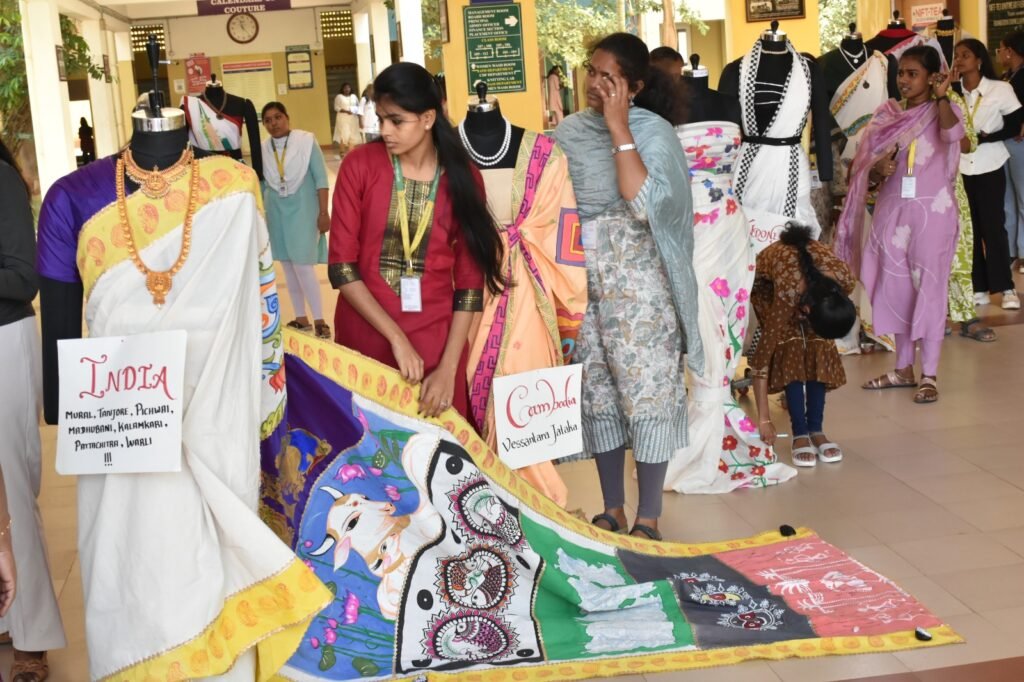
- Cambodia – Vessantara Jataka, narrating Buddhist tales through art
- Mexico – Artesania, celebrating colourful handcrafted heritage
- Hungary – Kalocsa, famed for its floral embroidery motifs
- Argentina – Filete Porteño, characterised by ornamental line art
- Sweden – Dalmålning, inspired by Scandinavian folk painting
- Indonesia – Kamasan, rooted in classical Balinese storytelling art
In addition to these global inspirations, Indian art traditions were also prominently featured, including Mural, Tanjore, Pichwai, Kalamkari, Pattachitra, Madhubani, and Warli, reinforcing India’s own diverse and deeply rooted artistic legacy.
The careful adaptation of these styles onto sarees required more than aesthetic understanding. Students had to study the cultural context, symbolism, and colour theory associated with each art form, ensuring authenticity while interpreting them through a contemporary lens.
A Celebration of Craft and Cultural Dialogue
The exhibition stands as a celebration of cultural exchange. It demonstrates how fashion can serve as a bridge between nations, histories, and artistic expressions. By translating global art traditions onto Indian textiles, the students showcased their ability to think beyond geographical limitations while maintaining respect for cultural integrity.
“Art Beyond Boundaries” also highlights the educational approach of NIFT-TEA College of Knitwear Fashion, which encourages research-driven creativity and hands-on craftsmanship. The one-month execution timeline further underscores the discipline and teamwork required to transform conceptual ideas into wearable art.
Visitors to the exhibition experienced an immersive visual journey, where each saree functioned as both a garment and a storytelling canvas. The display allowed audiences to appreciate the finesse of brushwork, detailing, and the harmonious blend of global inspiration with Indian tradition.
Promoting Sustainable and Slow Fashion
In today’s fashion landscape, sustainability has become more than a trend; it is a necessity. Hand-painted textiles inherently align with slow-fashion values, prioritising quality, craftsmanship, and longevity over rapid turnover.
By presenting hand-painted sarees rooted in global art traditions, the students subtly reinforced the importance of mindful production and cultural preservation. The exhibition encourages future designers to move beyond fast-fashion cycles and embrace design approaches that honour skill, heritage, and environmental responsibility.
Academic Leadership and Support
The exhibition was inaugurated in the presence of Dr V. R. Sampath, Dean; Mr C. Kandasamy, Management Coordinator; Dr R. Radhamani, Principal; and Ms Rajashwari R. Sharma, Head of the Department. Department Faculty Coordinators Ms Sangeetha and Ms Tharani also played a pivotal role in mentoring the students throughout the creative process.
Their collective support and guidance were instrumental in bringing this ambitious project to life, reinforcing the institution’s commitment to nurturing globally aware, technically proficient designers.
Looking Ahead
As the fashion industry increasingly values originality, storytelling, and sustainability, initiatives like “Exploring World Traditional Design in Saree” position young designers at the forefront of innovation. The exhibition not only showcased artistic excellence but also highlighted the transformative power of education in shaping the next generation of design leaders.
Through brushstrokes that crossed continents and narratives that transcended borders, the NIFT-TEA Costume Designing students have redefined the saree as a universal canvas, proving that when art meets tradition, fashion truly becomes global.