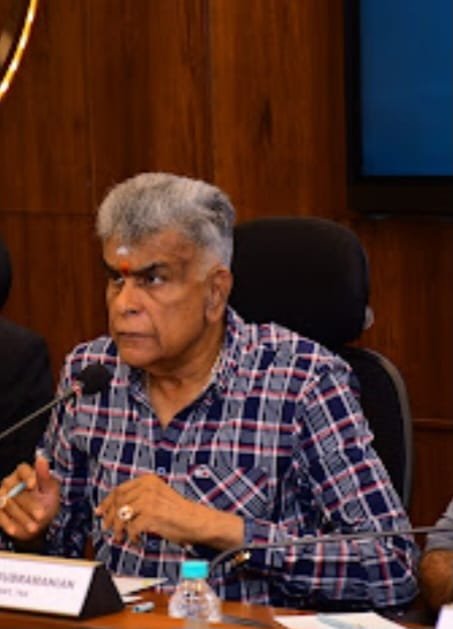

Dr. A. Sakthivel hails industrial allocation and single-window reforms while urging state action on migrant labor housing to capture growth from India’s expanding FTA portfolio.
TIRUPPUR, INDIA — Dr. A. Sakthivel, Chairman of the Apparel Export Promotion Council (AEPC), has formally endorsed the newly presented Tamil Nadu Budget 2026–27. Speaking on behalf of India’s garment export sector, Dr. Sakthivel highlighted the budget’s alignment with Tamil Nadu’s broader goal to scale its regional gross domestic product to a $1.5 trillion economy by fiscal year 2035–36.
The state’s initial fiscal roadmap under the new administration lays out significant capital outlays for manufacturing infrastructure, technical innovation, and trade facilitation across major textile and knitwear clusters like Tiruppur and Karur.
Capital Outlays & Industrial Modernization
The FY2026–27 budget delivers key allocations designed to boost industrial infrastructure, strengthen MSMEs, and streamline regulatory compliance:
- Textile Sector Initiatives (₹1,678 Crore): Direct funding earmarked for targeted programs, including the Tamil Nadu Technical Textile Mission and the Powerloom Modernisation Scheme.
- SIPCOT Industrial Park Expansion (₹3,500 Crore): Capital infusion to build out plug-and-play industrial infrastructure across key manufacturing corridors.
- MSME Ecosystem Support (₹2,142 Crore): Targeted operational and credit support for micro, small, and medium enterprise suppliers.
- Skill Development & Human Capital (₹2,022 Crore): Upward investment in workforce training to support high-value manufacturing transitions.
- Single Window 3.0: Launch of an updated trade facilitation portal aimed at improving ease of doing business and shortening project commission timelines.
Additionally, the state allocated ₹10 crore to establish the Tiruppur Textile Technology Centre, an R&D unit focused on technology adoption, process automation, and sustainable garment manufacturing.
Strategic Demands: Labor Infrastructure & Dedicated Governance
While commending the state’s fiscal directional stance, the AEPC emphasized that rapid trade expansion—fueled by India’s active Free Trade Agreements (FTAs) across 38 partner nations—presents immediate labor and supply chain constraints.
To bridge the workforce deficit and ensure cluster retention, Dr. Sakthivel renewed two central requests directly to the state leadership:
- Worker Housing & Hostel Scheme: A co-investment model offering a 50% capital subsidy, combined with a 50% interest-subsidized loan (at a 5% concession rate), to fund affordable, compliance-friendly housing for migrant garment workers.
- Establishment of a State Knitwear Board: A dedicated administrative body tasked with overseeing cluster-specific policy, raw material price stability, and global competitiveness frameworks for Tiruppur’s knitwear hub.
Industry Outlook
The structural investments in the FY2026–27 budget provide a foundation for Tamil Nadu to expand its export volume. However, realizing the full benefit of India’s trade agreements will depend on how quickly the state addresses labor supply chain bottlenecks. Implementing institutional worker housing and establishing dedicated administrative oversight will be crucial steps to maintaining Tiruppur’s position in global garment sourcing.